
Why Does My Outside Drain Overflow Only When Several Appliances Run?

If your outside drain overflows only when several appliances run at the same time, the drainage system is struggling with the combined volume of wastewater.
Washing machines, dishwashers, showers, baths, and kitchen sinks can all feed into connected pipework. One appliance may not create enough flow to expose a problem, but several running together can overwhelm a partially restricted drain.
The most common causes are a partial blockage, a restricted gully, poor pipe layout, or an undersized shared waste pipe. In some cases, the obstruction is further underground, while the outside gully is simply where the backed-up water becomes visible.
A drain that only overflows under heavy use has already lost some capacity. It should not be treated as normal.
What Does It Mean When My Outside Drain Overflows Under Heavy Use?

Several appliances can release large volumes of wastewater within a short period. Washing machines and dishwashers pump water out quickly, while showers and sinks add a continuous flow.
A healthy drainage system should carry this water away without the outside gully filling. If the pipe is restricted, water cannot pass through quickly enough. It builds behind the obstruction and rises through the nearest open drainage point, often an outside gully.
The gully is therefore not always the source of the problem. It may simply be the lowest visible point connected to a blockage further down the line.
If the drain copes with one appliance but not several, it usually has reduced capacity rather than a complete blockage.
Why Does My Outside Drain Overflow When Several Appliances Run?
A Partial Blockage Further Down the Drain
A partial blockage is the most common cause.
Grease, food residue, detergent, lint, scale, and general waste can gradually narrow the pipe. Water may still pass during ordinary use, but the remaining opening is too small to carry several appliance discharges at once.
As water builds behind the restriction, the level rises through the outside gully. Once the appliances stop, it may slowly drain away again. This temporary recovery does not mean the blockage has cleared.
Grease and Sludge in the Kitchen Waste Line
Kitchen sinks, washing machines, and dishwashers often share a waste route. This makes the pipe vulnerable to grease, food residue, detergent sludge, and lint.
Grease sticks to the pipe walls and catches other debris. The opening gradually narrows until the system struggles whenever more than one appliance empties.
The appliance may seem to cause the overflow, but the underlying restriction usually develops over a much longer period.
The Outside Gully Is Restricted
The obstruction may be local to the gully itself.
Leaves, silt, mud, moss, and food debris can collect around the outlet. Small amounts of water may still pass, but higher flow causes the gully to fill faster than it can empty.
If removing visible debris solves the issue permanently, the restriction was probably local. If the gully fills again shortly afterwards, the blockage is likely further downstream.
Poorly Installed or Undersized Pipework
Wastewater relies on gravity to move through household pipework. If the pipe does not have enough fall, contains too many tight bends, or is too small for the fixtures connected to it, flow can be restricted without a complete blockage.
These faults are common in extended kitchens and utility rooms where new appliances have been connected to older drainage. The system may cope with one outlet but struggle when several discharge together.
A Deeper External Drain Restriction
The problem may sit beyond the gully in the underground drain.
Possible causes include scale, tree roots, damaged joints, displaced pipes, or accumulated waste. A deeper restriction is more likely if the gully remains full after the appliances stop, nearby drains are also slow, or internal fixtures begin to gurgle.
Cleaning the visible gully will not resolve an obstruction further along the drain.
Which Appliances Are Most Likely to Trigger the Overflow?

Fixtures that release water quickly are most likely to expose reduced drainage capacity.
The main triggers include:
Washing machines during drain and spin cycles.
Dishwashers when they pump out.
Baths when the plug is removed.
Showers producing continuous wastewater.
Kitchen sinks emptied while another appliance drains.
The pattern can help identify the severity. One appliance may cause no issue, while several together may trigger visible overflow.
Is the Problem in the Gully or Further Downstream?
Watch what happens after the appliances stop.
If the water level drops quickly, the restriction may be minor or close to the gully. If it drains slowly or remains full, the blockage is likely deeper or more severe.
Test the appliances individually as well. If one appliance causes an overflow, the restriction may already be advanced. If it only happens when several run together, the drain likely has reduced capacity but is not fully blocked.
Signs that the problem extends beyond the gully include:
Gurgling from the kitchen sink.
Water rising in an internal fixture.
Slow shower or bath drainage.
Bad smells from plugholes.
Toilets bubbling.
Several drains reacting together.
If multiple fixtures are affected, the problem is unlikely to be limited to the outside gully.
Is It Serious if My Outside Drain Only Overflows Under Heavy Use?
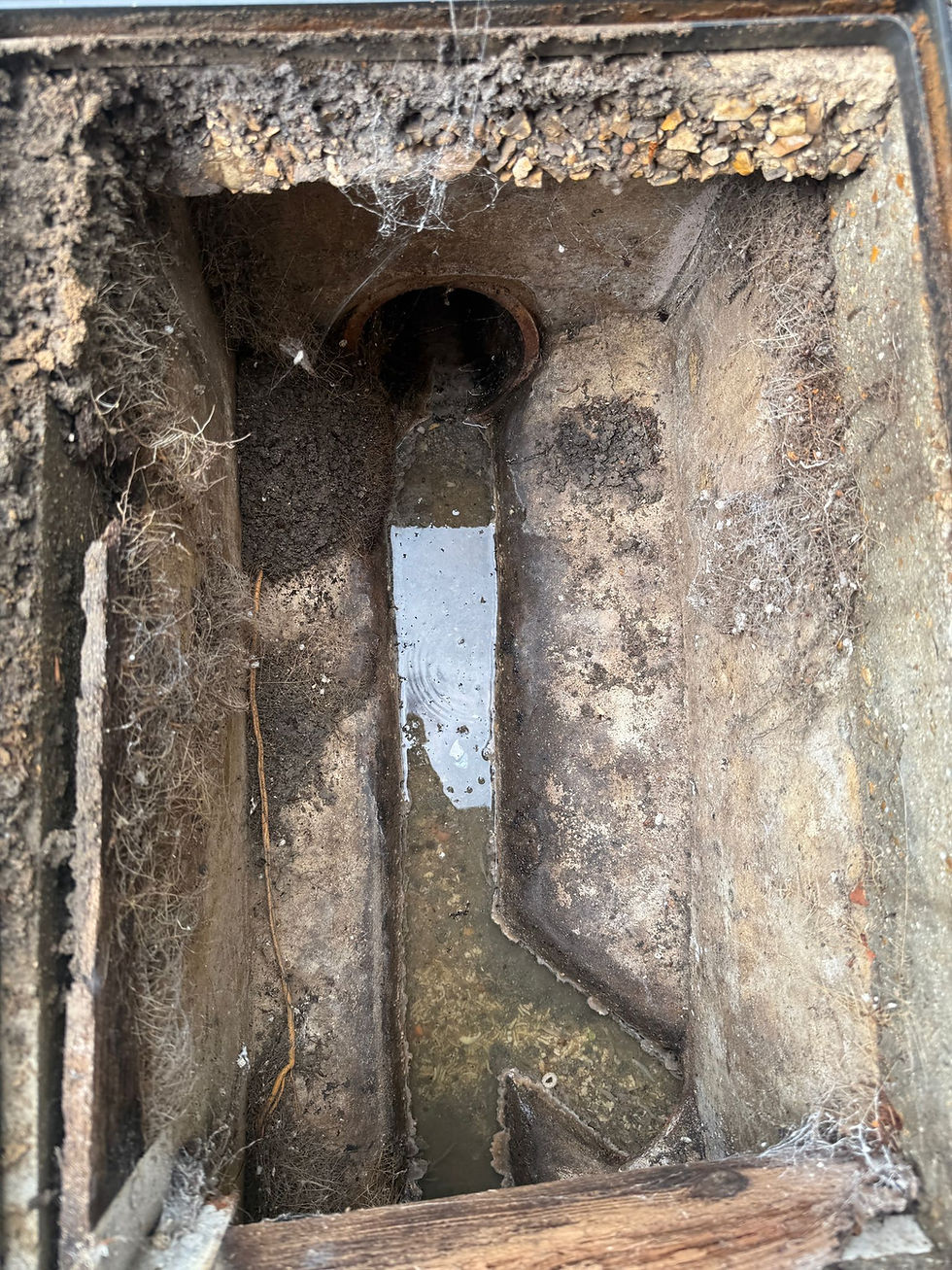
It may not be an immediate emergency if the water remains outside and drains away afterwards, but it is still a drainage fault.
A household drain should cope with normal appliance use. If several appliances cause an overflow, the system is operating close to its reduced limit.
If ignored, the restriction may worsen until one appliance is enough to trigger a backup. It can also lead to foul smells, contaminated surfaces, slippery areas, and wastewater returning through internal fixtures.
The fact that it only happens under heavy use does not make it harmless.
What Can I Safely Check Myself?
Start by removing visible leaves, silt, and debris from the gully while wearing suitable gloves. Avoid pushing the material further into the outlet.
Run each appliance separately and note when the water begins to rise. This can help establish whether one connection is causing the issue or whether the combined volume is overwhelming the drain.
Check the kitchen sink and visible appliance hoses for slow drainage, gurgling, or obvious kinks. Do not dismantle unfamiliar fittings without understanding where they lead.
Avoid using chemical drain cleaners. They rarely solve external or underground restrictions and may remain in backed-up water, creating a hazard for anyone who later opens the system.
When Does an Overflowing Outside Drain Need Professional Help?

Professional investigation is advisable when the overflow keeps returning, the gully remains full, or removing visible debris makes no lasting difference.
Further warning signs include:
Internal fixtures are slow or gurgling.
Wastewater or strong smells are present.
The issue is becoming more frequent.
Several appliances cause immediate overflow.
The property has older or altered drainage.
At this point, the priority is locating the restriction rather than repeatedly clearing the top of the gully.
How Will a Professional Fix the Problem?
A drainage specialist will test the flow from different fixtures to identify which pipes feed the gully and whether the restriction is local or further downstream.
The connected drain may be cleared using mechanical equipment or high-pressure water jetting. The aim is to restore the full pipe diameter rather than create a temporary opening through the blockage.
If the problem keeps returning, a CCTV drain survey may be used to identify roots, damaged joints, scale, poor connections, or collapsed pipework.
Where poor layout or insufficient capacity is responsible, the long-term fix may involve correcting the pipe fall, replacing undersized sections, or improving appliance connections.
Final Thoughts
If your outside drain overflows only when several appliances run, the drainage system is struggling with the combined flow.
The most likely causes are a partial blockage, restricted gully, poor pipe layout, or undersized shared waste pipe. The gully is often where the problem becomes visible rather than where it begins.
Identifying the cause early can prevent an external overflow from developing into an internal wastewater backup.
If you have any concerns over your drainage system, get in touch with GSB Drainage today for a no-obligations consultation.


Comments