
Why Does My Outside Drain Overflow When the Bath Empties?
If your outside drain overflows when the bath empties, the drainage system is usually struggling to carry away the sudden volume of water quickly enough.
A bath releases far more water in one go than a running tap or shower. If the drain is partially blocked, restricted, poorly laid out, or undersized, that sudden surge can expose a problem that is not obvious during normal day-to-day use.
In many cases, the outside gully is simply where the backed-up water becomes visible. The actual restriction may be further along the pipework or underground drain.
The most common causes include a partial blockage, debris inside the gully, poor pipe fall, damaged drainage, or a restriction further downstream. The important thing is to work out whether the problem is local to the gully or part of a wider drainage issue.
This guide explains why your outside drain overflows when the bath empties, what you can safely check yourself, and when professional drainage help is needed.
Why Does my Outside Drain Overflow When the Bath Empties?
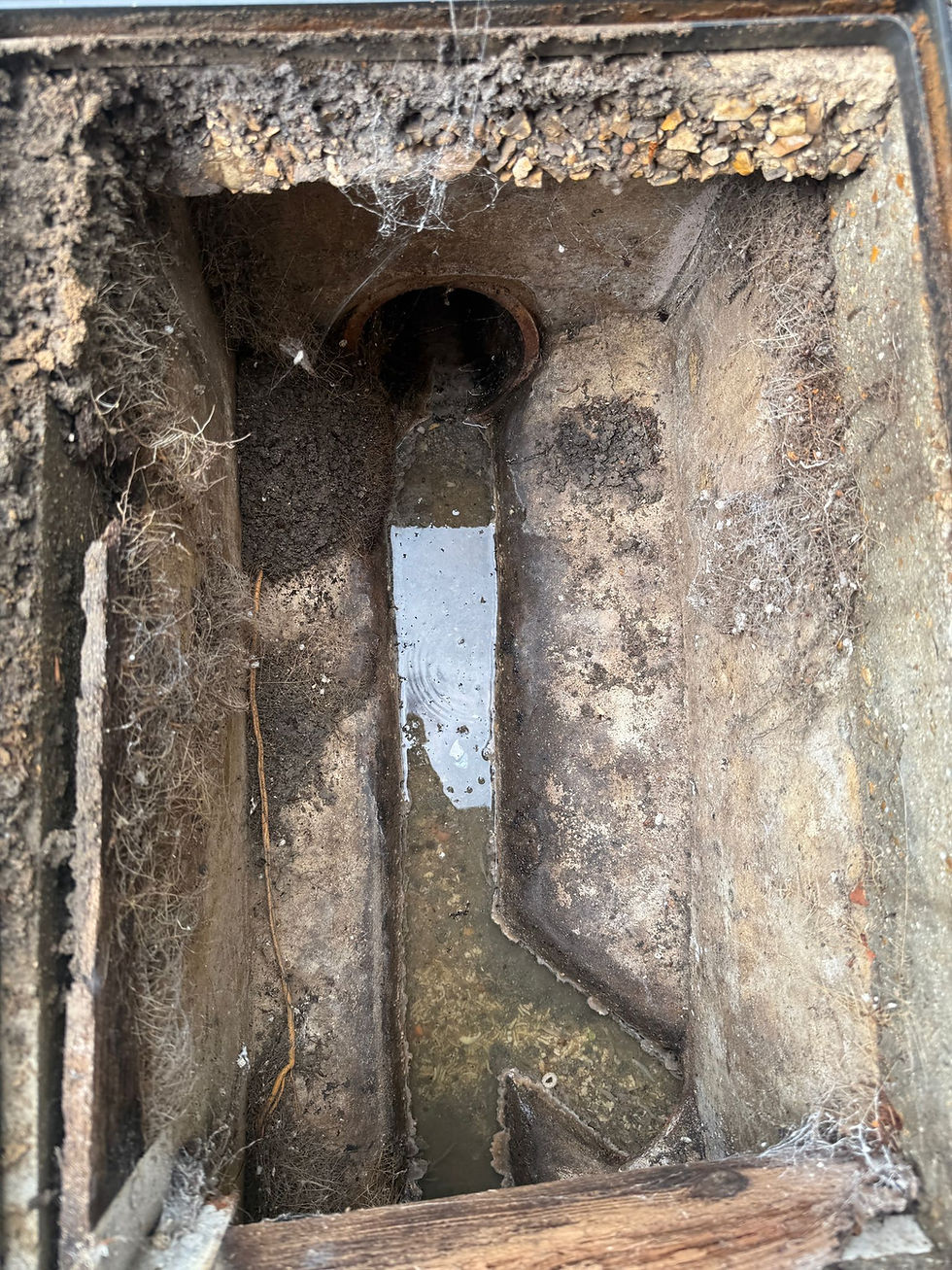
A full bath can release a large amount of water within a very short period once the plug is removed.
That creates a much heavier flow than most other bathroom fixtures. A drainage system in good condition should cope with that volume without any visible problem.
If the pipe is partially restricted, however, the water cannot move through quickly enough. It begins to build behind the obstruction and rises through the nearest open drainage point, which is often an outside gully.
This is why the problem may only appear when the bath empties. The drain may still cope perfectly well with smaller amounts of water.
The fact that it only happens under heavy flow does not mean the system is healthy. It usually means the drain has already lost some of its normal capacity.
A Partial Blockage Can Make the Outside Drain Overflow
A partial blockage is one of the most common reasons an outside drain overflows when the bath empties.
Bathroom drainage can gradually collect:
Hair.
Soap residue.
Limescale.
Shampoo and product build-up.
General sludge.
If the bathroom waste joins pipework that also carries kitchen water, grease and food residue can contribute as well.
The restriction may still leave enough space for water to pass during normal use. When the bath empties, however, the sudden flow overwhelms the remaining opening.
Water backs up behind the obstruction and rises through the outside gully.
Once the bath has finished draining, the water level outside may slowly fall again. This can make the problem seem temporary, but it usually means the blockage is still there.
The Outside Gully Itself May Be Restricted

Sometimes the problem is much closer to the surface.
Outside gullies can collect leaves, mud, moss, silt, food residue, and other debris. A partially restricted gully may cope with small amounts of wastewater but struggle when the bath releases a large volume.
If the water rises quickly in the gully and then drains slowly, this may be the cause.
Where safe, visible debris can be removed carefully while wearing suitable gloves. Avoid pushing material deeper into the outlet.
If cleaning the gully solves the issue and it does not return, the problem may have been local. If the gully fills again soon afterwards, the restriction is likely further down the drain.
The Blockage May Be Further Down the Drain
If the outside gully is clear but still overflows when the bath empties, the actual problem may sit further downstream.
Possible causes include:
Heavy scale build-up.
Tree root intrusion.
Displaced pipe joints.
Cracked or damaged pipework.
Accumulated waste.
A partially collapsed drain.
In these situations, the gully is not causing the problem. It is simply acting as the relief point for water that cannot travel further through the system.
A deeper restriction becomes more likely if the gully remains full for a long time after the bath has emptied or if other fixtures begin to react as well.
Poor Pipe Fall Can Cause the Drain to Struggle
Drainage pipework needs the correct fall so wastewater can move away efficiently under gravity.
If the pipe is too flat, water can sit inside it instead of flowing freely. Over time, this also encourages debris and waste to settle in the pipe, making the restriction worse.
Poor pipe fall can occur because of:
Incorrect installation.
Later bathroom alterations.
Extensions.
Ground movement.
Poorly modified waste connections.
A drain with poor fall may seem fine under light use but struggle when a bath empties and sends a large volume of water through at once.
An Undersized Waste Pipe May Be the Problem

In some properties, the pipe itself may not have enough capacity for the amount of water entering it.
This is more common where bathrooms have been added, relocated, or upgraded without the existing drainage being fully reconsidered.
For example, a new bath may have been connected into an older waste line that was originally designed for a smaller fixture.
The pipe may not be blocked at all. It may simply be unable to carry the discharge quickly enough.
If the problem has existed since renovation work or bathroom alterations were completed, the pipe size and layout should be checked.
Why Does the Bath Cause an Overflow but the Shower Does Not?
This is usually down to flow rate.
A shower releases wastewater gradually. Even during a long shower, the drain receives a relatively steady flow.
A bath is different. Removing the plug releases a large volume almost immediately. A partially restricted drain may therefore cope with the shower but fail when the bath empties.
This is an important diagnostic clue. If the shower drains normally but the outside gully rises when the bath empties, the system likely has reduced capacity rather than a complete blockage.
How Can I Tell if the Problem Is in the Gully or Further Downstream?
Start by watching what happens after the bath finishes emptying.
If the water in the gully drops quickly, the restriction may be relatively minor or close to the surface.
If the water drains very slowly or remains high, the blockage is more likely to be further downstream.
You can also test other fixtures separately. Check whether:
The shower makes the gully rise.
The washing machine causes the same problem.
The kitchen sink gurgles.
The toilet bubbles.
Other outside drains hold water.
If several fixtures cause similar symptoms, the problem is more likely to affect a shared or main section of drainage.
Is It Serious if My Outside Drain Only Overflows When the Bath Empties?

It may not be an immediate emergency if the water remains outside and eventually drains away, but it is still a fault that should not be ignored.
A household drainage system should be able to cope with a bath emptying normally.
If the system is already overflowing under that level of use, the restriction can worsen over time.
Possible consequences include:
More frequent external overflow.
Bad smells.
Wastewater around patios or paths.
Slower internal drainage.
Gurgling fixtures.
Wastewater backing up into the shower, bath, or other low outlets.
The earlier the cause is identified, the easier it usually is to deal with.
What Can I Safely Check Myself?
Start with the simple things. Remove visible debris from the gully while wearing gloves and check whether the outlet appears clear.
You can then release a smaller amount of bath water and watch how the gully reacts. If the water rises even with a modest amount, the restriction may already be significant. Also pay attention to the bathroom itself. Slow drainage, gurgling, bad smells, or water movement in nearby fixtures can indicate that the problem is not limited to the outside gully.
Avoid using chemical drain cleaners for an external or underground blockage. They are unlikely to resolve deeper restrictions and may sit in backed-up water, creating a hazard for anyone who later opens the system.
When Should You Call a Drainage Professional?

Professional investigation is advisable if the problem keeps returning or the gully remains full after the bath has emptied.
You should also get the system checked if:
Other fixtures are affected.
Bad smells are present.
The overflow is becoming more frequent.
Visible cleaning makes no difference.
The property has older drainage.
The bathroom has recently been altered.
You suspect the blockage is underground.
At this point, the aim should be to locate the cause rather than repeatedly clearing the surface.
How Will a Professional Fix an Outside Drain That Overflows When the Bath Empties?
A drainage specialist will first identify where the bath waste joins the main drainage system and whether the restriction is local or further downstream.
If the cause is a blockage, the connected drain can be cleaned using appropriate mechanical equipment or high-pressure water jetting.
Where the problem keeps returning, a CCTV drain survey may be used to inspect the pipe internally.
This can reveal problems such as:
Root ingress.
Heavy scale.
Damaged joints.
Poor connections.
Cracked pipework.
Partial collapse.
If the issue is caused by poor pipe layout or inadequate capacity rather than debris, the long-term fix may involve altering the fall, replacing an undersized section, or correcting the connection.
How Can You Prevent the Outside Drain Overflowing Again?

Once the problem has been resolved, simple maintenance can reduce the risk of it returning.
Useful preventative steps include keeping outside gullies free from leaves and silt, removing hair from bath wastes regularly, and acting quickly when drains begin to slow or gurgle.
Recurring problems should not be treated as separate one-off blockages. If the same gully keeps overflowing, there is usually an underlying reason that needs to be identified.
Final Thoughts
If your outside drain overflows when the bath empties, the system is struggling with the sudden volume of wastewater.
The most likely causes are a partial blockage, restricted gully, poor pipe fall, undersized waste pipe, or a deeper obstruction further down the drain. The bath exposes the problem because it releases far more water at once than most other fixtures.
A drain that copes with normal use but overflows when the bath empties is already showing reduced capacity. Finding the cause early can stop a manageable external overflow from developing into a much more disruptive internal backup.
If you're experiencing any kind of issue with your drainage system, get in touch with GSB Drainage today - we'll be able to identify the problem and offer a fast, and cost-effective solution.


Comments