
Why Does My Manhole Fill Up When I Use the Washing Machine?
If your manhole fills up when you use the washing machine, the drainage system is usually struggling to carry the sudden volume of wastewater away quickly enough.
A washing machine does not release water gradually. During its drain and spin cycles, it pumps out a large amount of water in a short period. If there is a partial blockage, poor pipe fall, damaged drain, or restriction further downstream, that surge can cause the water level inside an inspection chamber or manhole to rise.
In some cases, the manhole fills and then slowly empties again once the washing machine stops. In others, the water stays high or starts affecting other fixtures.
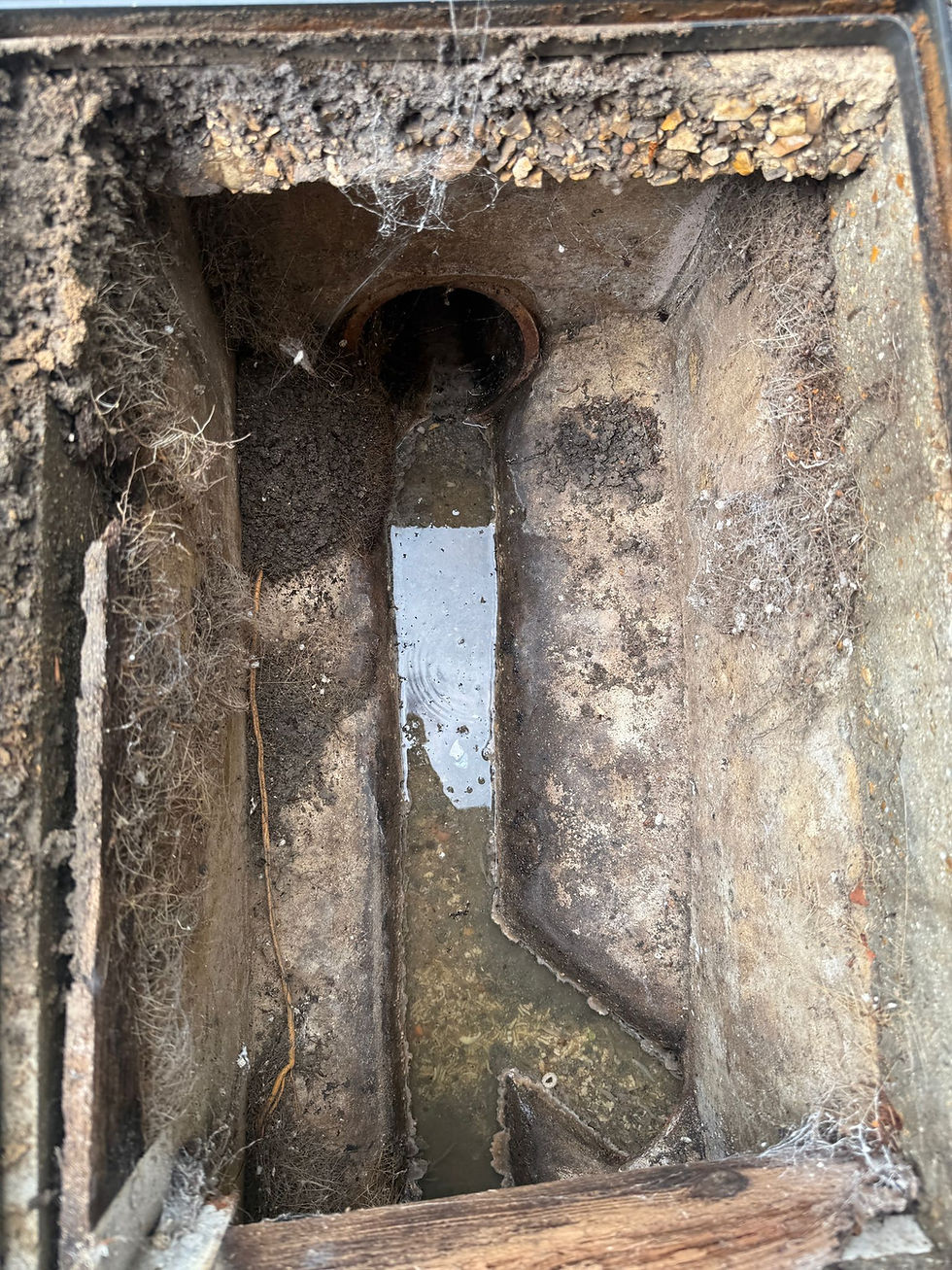
The important point is that the manhole itself is not necessarily the source of the problem. It is often simply where the restriction becomes visible.
This guide explains why your manhole fills when the washing machine drains, what the water level can tell you, and when the issue needs professional drainage investigation.
Why Does the Washing Machine Make the Manhole Fill Up?
Washing machines discharge wastewater quickly and under pump pressure. That creates a short but significant surge through the connected waste pipe.
A healthy drainage system should be able to handle that flow without the water level in an inspection chamber rising significantly.
If the pipe beyond the chamber is partially blocked or restricted, however, the water enters faster than it can leave. The chamber begins to fill until the flow catches up.
This is why you may only notice the problem during the washing machine’s drain cycle.
Normal sink use may not send enough water through the system to expose the restriction.
If the manhole fills but eventually empties, the drain still has some capacity. It just does not have enough to deal with higher flow properly.
What Does It Mean if the Manhole Fills and Then Slowly Empties?

The speed at which the water level falls can tell you a lot.
If the chamber fills during the washing machine cycle but drops relatively quickly afterwards, the system may have a minor restriction or simply be operating close to reduced capacity.
If it takes several minutes to fall, a more significant partial blockage is likely.
If the water remains high or barely moves, the downstream pipe may be heavily blocked.
The important point is that water draining away eventually does not mean the system is healthy. A properly functioning drain should carry washing-machine wastewater away without the inspection chamber repeatedly filling.
A Partial Blockage After the Manhole Is a Common Cause
One of the most likely reasons your manhole fills when you use the washing machine is a partial blockage further downstream.
Common causes include:
Grease and fat.
Detergent sludge.
Lint and fibres.
Scale.
Wipes and sanitary waste.
General debris.
If water enters the manhole strongly but struggles to leave, the restriction is probably after the chamber rather than between the house and the manhole.
As the washing machine pumps out, water accumulates behind the blockage and raises the level inside the chamber.
Once the appliance stops, that water slowly works its way through the restricted pipe.
The Blockage Could Be Before the Manhole
Not every blockage sits downstream.
If fixtures inside the property are backing up but very little water reaches the inspection chamber, the restriction could be between the house and the manhole.
This distinction is useful because it helps narrow down where the problem lies.
For example, if the kitchen sink gurgles, the washing machine struggles to drain, and the manhole remains relatively empty, the blockage may be in the internal waste run or connecting pipe.
If the manhole itself fills rapidly, the restriction is more likely to be beyond it.
Kitchen Waste Can Contribute to the Problem
Washing machines often share drainage routes with kitchen sinks and dishwashers.
That means the same pipe may carry:
Grease.
Food residue.
Detergent.
Soap.
Lint.
Grease can stick to the inside of the pipe and gradually trap other material. Over time, the available space inside the drain becomes smaller.
The washing machine may appear to be causing the problem because that is when the manhole fills, but the restriction may have developed slowly over months or years.
The appliance is simply exposing the reduced capacity.
Poor Pipe Fall Can Cause the Manhole to Fill
Underground drains rely heavily on gravity.
If the pipe does not have sufficient fall, wastewater moves more slowly and solids are more likely to settle inside the drain.
Poor fall can be caused by incorrect installation, ground movement, later building work, or alterations to the drainage layout.
A pipe with poor fall may cope with small amounts of water but struggle when the washing machine sends a sudden surge through the system.
This is one reason recurring problems should be properly diagnosed rather than repeatedly unblocked. If poor pipe alignment is the underlying cause, clearing accumulated waste may only provide temporary relief.
Tree Roots or Damaged Pipework May Restrict Flow

Recurring manhole filling can also point to a physical problem with the underground drain.
Possible causes include tree root ingress, displaced joints, cracked pipes, heavy scale, or partial collapse.
These problems create a fixed restriction that does not disappear when the drain is cleared superficially.
They become more likely if:
The problem keeps returning.
The property has older drainage.
Trees are close to the drain run.
The chamber repeatedly fills after professional clearing.
Several fixtures are affected.
A CCTV drain survey is usually the most effective way to confirm this type of problem.
Why Does the Manhole Only Fill During the Washing Machine Drain Cycle?
The timing is an important clue.
A washing machine releases wastewater in concentrated bursts. A sink, by comparison, usually releases water more gradually unless the bowl is emptied all at once.
A partially restricted drain may therefore cope with ordinary tap use but struggle during the washing machine pump-out.
This means the washing machine itself is not necessarily faulty.
The issue is more often that the drainage system cannot handle the appliance’s normal discharge because its capacity has been reduced.
How Can I Tell if the Blockage Is Before or After the Manhole?
If it is safe to observe the inspection chamber, watch what happens when the washing machine empties.
If water enters the chamber normally but the level rises because it cannot leave, the restriction is probably downstream.
If little or no flow reaches the chamber while fixtures inside the property are backing up, the blockage may be upstream.
You can also check whether other fixtures cause similar symptoms. Useful signs include:
The dishwasher also makes the chamber rise.
The kitchen sink gurgles.
The toilet bubbles.
An outside gully fills.
Several fixtures drain slowly.
If multiple fixtures affect the same chamber, the problem is more likely to involve a shared drainage line.
Is It Normal for a Manhole to Hold Water?

A small amount of residual water may sometimes be visible depending on the chamber design and drain layout.
What is not normal is for the water level to rise significantly every time the washing machine drains.
Repeated filling means water is not leaving the chamber efficiently enough.
If the level rises close to the top, overflows, or remains high after appliance use, the restriction should be investigated.
Is a Manhole Filling During Washing Machine Use Serious?
It may not be an immediate emergency if the water remains contained and eventually drains away, but it is still a warning sign.
A partially restricted drain can become a complete blockage over time.
As the problem worsens, you may start to see:
Slower internal drainage.
Bad smells.
Outside gully overflow.
Toilet bubbling.
Wastewater backing up indoors.
The inspection chamber remaining full.
The best time to investigate is while water is still passing through the system, rather than waiting until the drain stops flowing completely.
What Can I Safely Check Myself?
If the chamber is accessible, you can observe what happens during a washing-machine drain cycle from a safe distance.
You can also test other fixtures individually and compare how the water level reacts.
Useful checks include:
Running the kitchen sink.
Running the dishwasher separately.
Watching how quickly the chamber empties.
Checking for visible debris.
Listening for gurgling inside the property.
Never enter an inspection chamber or reach into deep wastewater. Avoid forcing rods into pipework if you do not know the direction of the drain.
Chemical drain cleaners are also unsuitable for this kind of external problem and can create a hazard if they remain in backed-up water.
When Should You Call a Drainage Professional?

Professional help is sensible if the chamber repeatedly fills, drains very slowly, or remains full.
You should also arrange an inspection if:
Several fixtures are affected.
Strong drain smells are present.
The problem keeps returning.
The property has older drainage.
There are trees near the drain run.
The chamber has overflowed.
Previous unblocking has only helped temporarily.
At this stage, locating the restriction matters more than repeatedly trying to clear it from the surface.
How Will a Drainage Professional Fix the Problem?
A drainage specialist will usually start by determining whether the restriction sits before or after the inspection chamber.
The drain may then be cleared mechanically or using high-pressure water jetting to remove accumulated waste and restore flow.
If the issue is recurring, a CCTV drain survey may be used to look for root ingress, damaged joints, scale, displaced pipes, or partial collapse.
Where structural damage is found, the long-term solution may involve drain relining, local repair, pipe replacement, or correction of poor pipe alignment.
Final Thoughts
If your manhole fills up when you use the washing machine, the drainage system is usually struggling with the appliance’s sudden discharge.
The most likely causes are a partial blockage, grease or sludge build-up, poor pipe fall, root intrusion, or damaged underground pipework.
If the chamber fills and then drains slowly, the system still has some flow, but not enough. That is usually the best time to investigate the problem before it develops into a complete blockage or wastewater backup.
GSB Drainage offers same-day assistance for any issue you have with your drain. Get in touch today for a no-obligations consultation.


Comments