
Why Does My Kitchen Sink Back Up When the Washing Machine Drains?
Updated: May 26
If your kitchen sink backs up when the washing machine drains, the problem is usually not the sink itself. In most cases, it means the shared waste pipe cannot move water away quickly enough.
A washing machine pumps out a large volume of wastewater in a short burst. If there is any restriction in the pipework, that surge of water will look for the easiest place to go. Often, that is back toward the kitchen sink. You may see water rise in the bowl, hear gurgling from the plughole, or notice bad smells around the same time.
This is a common issue in UK homes, especially where the washing machine and kitchen sink share the same waste run. The cause is often a partial blockage, poor waste pipe layout, or a deeper drainage restriction further down the line. The key point is simple: the sink backing up is a symptom that the drainage system is under strain.
This guide explains the most likely causes, what you can check yourself, when the issue points to something more serious, and how it is properly fixed.
What it means when the washing machine makes the sink back up
Your kitchen sink and washing machine usually discharge into the same section of waste pipe. Under normal conditions, that is not a problem. The wastewater leaves the appliance, travels through the shared pipework, and drains away without affecting the sink.
When the system is restricted, the situation changes.
A washing machine does not release water slowly like a tap. It pumps water out under pressure, usually during the drain or spin cycle. If the pipe is narrowed by grease, debris, poor pipe alignment, or an obstruction further down the run, the water cannot escape at the speed it needs to. Pressure builds in the pipe and forces water back toward the nearest outlet.
That is why the water shows up in the kitchen sink.
This is an important distinction. The sink is often where the problem becomes visible, but not necessarily where the blockage is located. Many homeowners clean the sink, clear the trap, and assume the issue has been dealt with. Sometimes that helps, but often the actual problem sits:
further along the waste pipe
in the external drain
at a poor junction in the pipe layout
in a shared section of drainage outside the property
If the sink backs up repeatedly when the washing machine drains, the system is telling you that the waste route is not coping properly.
The most common causes
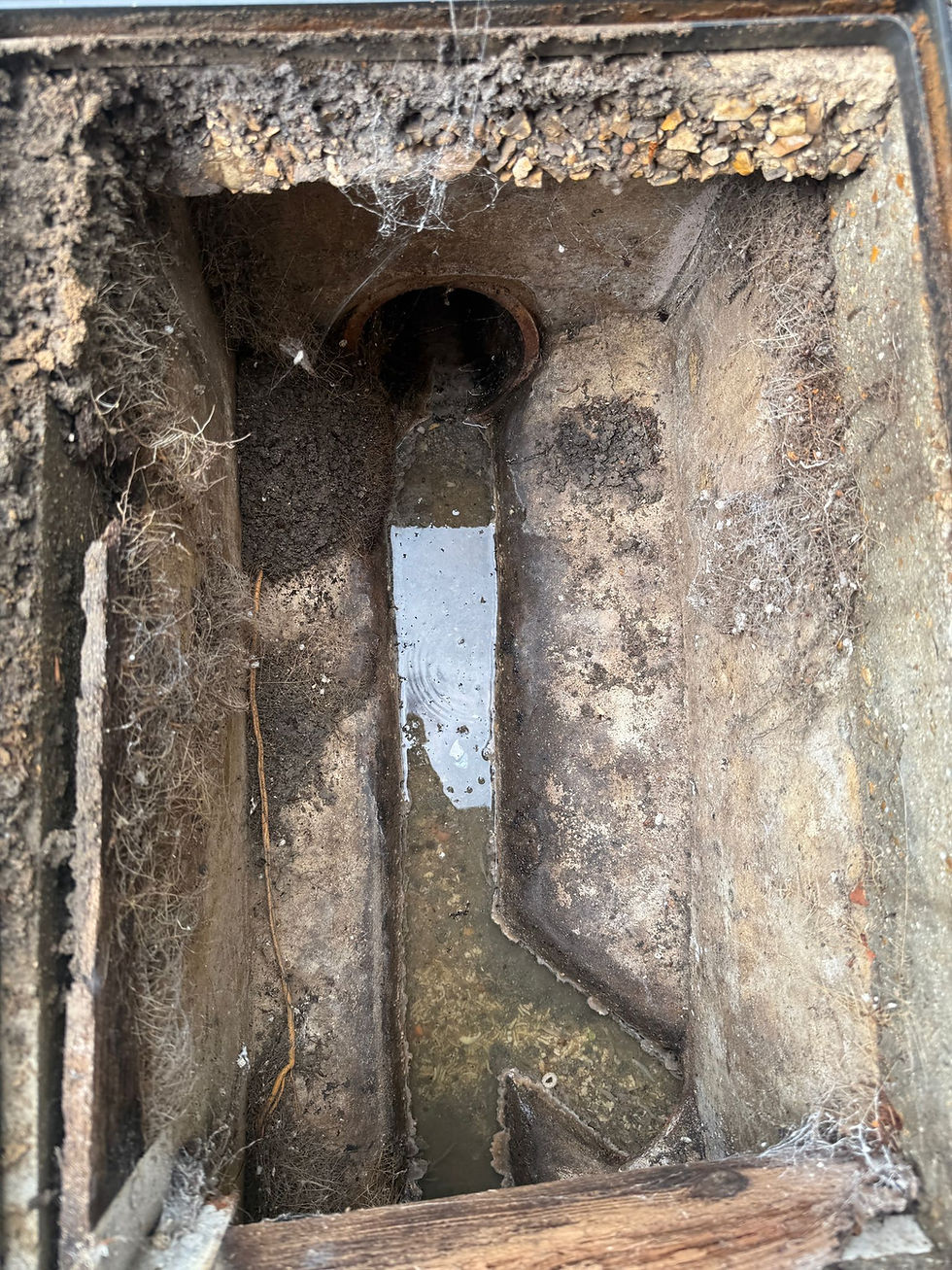
Partial blockage in the shared waste pipe
This is the most common cause.
Kitchen waste pipes gradually collect:
grease
fat
soap residue
food particles
general sludge
Washing machine waste adds its own build-up over time, including lint, detergent residue, and fine debris. Even if the pipe is not fully blocked, a narrowing inside the pipe can be enough to cause trouble when the washing machine discharges a large amount of water quickly.
This is why many homeowners say the sink seems “mostly fine” during normal use, but backs up when the appliance drains. Day-to-day flow may still be possible. The weakness only shows up when the pipe is placed under pressure.
Blockage further down the line
The restriction may not be under the sink at all.
If the problem sits further along the drainage route, the whole run can begin to struggle. In that situation, the washing machine discharge cannot get past the restriction fast enough, and the sink becomes the point where water and pressure push back.
This is one reason why surface-level fixes often fail. You might remove some debris from the trap and see a slight improvement, but the backup returns because the actual obstruction remains in place downstream.
Where this becomes more likely:
repeated backup despite cleaning the sink trap
gurgling from more than one fixture
outdoor drains also showing signs of slow flow
bad smells that keep returning
Poorly designed or poorly installed waste pipework
Not every backup is caused by a conventional blockage. In some homes, the pipework layout itself is part of the problem.
Common issues include:
inadequate fall on the pipe
too many tight bends
long horizontal runs
undersized waste pipe
poor appliance connection into the main waste line
Wastewater needs both gravity and airflow to move efficiently. If the pipe has been installed badly, water may slow down, pool, or create turbulence in the run. A washing machine discharge can then overwhelm the system even without a severe blockage.
This is especially common in altered kitchens, extensions, or properties where appliances have been added into an existing waste arrangement that was not designed for the load.
Air pressure and venting problems
Drainage systems do not rely on water movement alone. They also depend on correct airflow.
When a washing machine forces water into the waste pipe, air in the system needs somewhere to go. If venting is poor or the drainage layout creates pressure imbalance, air can be forced back through the sink trap. That often produces:
gurgling
bubbling
water movement in the sink
occasional bad smells
A venting issue can exist on its own, but it is often worse when combined with partial blockage or bad pipe layout. If the sink gurgles before or after backing up, airflow is likely part of the problem.
Restriction in the external drain
Sometimes the internal pipework is not the real issue. The problem may sit outside the property in the drain run itself.
External drains can become restricted by:
grease and waste build-up
scale
silt
root ingress
displaced joints
damaged pipe sections
If the washing machine and kitchen sink waste eventually feed into a partially blocked external drain, water can back up through the internal system when the appliance discharges.
This is more likely if you also notice:
slow outdoor gullies
standing water in a chamber
smells outside near the kitchen waste run
recurring issues despite internal cleaning
Signs this is more than a minor blockage

A single minor backup can sometimes be caused by local build-up near the trap. Repeated or combined symptoms usually suggest something more significant.
Warning signs include:
the sink backs up most times the washing machine drains
the sink gurgles during the wash or spin cycle
bad smells come from the plughole
the sink drains slowly at other times
the dishwasher causes similar symptoms
other fixtures make noise when water is used
outdoor drains appear slow or partially full
the issue keeps returning after basic cleaning
The more of these symptoms are present, the less likely it is that the problem is a simple local blockage under the sink.
Is it serious?
Not always immediately, but it should not be ignored.
If the system is already backing up under the pressure of a washing machine discharge, it means there is not enough drainage capacity in its current state. That may be due to blockage, poor installation, or a deeper fault. None of those improve on their own.
If left alone, the issue can progress to:
full sink blockage
wastewater overflow into the kitchen sink
recurring smells
slower drainage across connected fixtures
more extensive cleaning or repair work later
In most cases, the earlier the cause is identified, the easier and cheaper it is to fix.
What you can check yourself first
Check whether the sink drains slowly in normal use
Run the kitchen tap and see how the sink behaves. If water lingers or drains more slowly than expected, that supports the idea of a developing restriction in the waste pipe.
A sink that drains perfectly during normal use can still have a problem further down the line, but slow drainage strengthens the case for blockage.
Clean the trap and remove obvious debris
If you are comfortable doing so, remove and clean the trap beneath the sink. Check for:
grease sludge
food residue
trapped debris
This is a sensible first step because a local blockage can sometimes be enough to trigger the problem. If the trap is clear and the issue continues, the restriction is likely elsewhere.
Watch exactly when the backup happens
Observe the washing machine cycle.
Ask yourself:
does the sink back up every time?
does it happen only on the final drain or spin cycle?
does the sink gurgle before water rises?
does the problem happen with the dishwasher too?
This helps distinguish between a general waste problem and a specific surge issue caused by appliance discharge.
Check outside drains if they are safely accessible
If you have access to an external gully or inspection point, look for standing water or sluggish flow after the washing machine drains. A high water level outside suggests the restriction may be further down the system, not under the sink.
Do not rely on chemical drain cleaners
Chemical cleaners are rarely a proper solution for this kind of issue. They may have limited effect on grease near the top of the line, but they do not address poor pipe layout, deeper obstruction, venting issues, or external drain problems. On older pipework, repeated use can also be unhelpful.
When to call a drainage professional

You should stop guessing and get the system assessed if:
the problem keeps returning
the sink regularly backs up during wash cycles
cleaning the trap has not solved it
there are bad smells or gurgling noises
the dishwasher causes similar symptoms
outside drains appear slow
you suspect the problem is further down the line
At that point, the issue needs diagnosis rather than another temporary fix.
How the problem is properly fixed
A professional approach starts by identifying where the restriction or failure actually is.
That may involve checking:
the sink waste and trap
the shared waste run
the appliance connection
the external drain
the condition of the pipework
If the problem is blockage, the aim is not just to poke a hole through it. The pipe needs to be cleared thoroughly enough to restore proper flow. Depending on the location and severity, that may involve professional drain cleaning or jetting.
If the issue is deeper in the system, a CCTV drain survey may be needed to confirm:
internal build-up
structural defects
root ingress
displaced joints
recurring obstruction points
If the layout is poor, the long-term answer may be corrective pipework rather than repeated unblocking.
How to help prevent it happening again
Once the immediate issue is resolved, prevention matters.
Good practice includes:
do not pour grease or fat down the sink
scrape food waste into the bin before washing dishes
keep strainers in place where appropriate
act early on gurgling or slow drainage
avoid treating repeated symptoms as separate one-off issues
have recurring problems assessed properly before they worsen
If a property has a history of sink backups, washing machine discharge problems, or recurring blockages, it is usually worth investigating the system properly rather than waiting for another failure.
Final thoughts
If your kitchen sink backs up when the washing machine drains, the drainage system is not coping with the surge of wastewater it is being asked to handle. In most cases, that comes down to a partial blockage, poor waste pipe layout, airflow issues, or a restriction further down the line.
The sink itself is often just where the symptom appears. The actual cause may be under the sink, further along the shared waste pipe, or in the external drainage system.
The right response is straightforward: check the obvious local causes, pay attention to repeat patterns, and do not mistake a temporary improvement for a proper fix. If the problem keeps happening, the priority is to identify the exact cause and deal with it thoroughly.
If you are experiencing any kind of drainage problem, get in touch today for a free, no obligations quote.


Comments